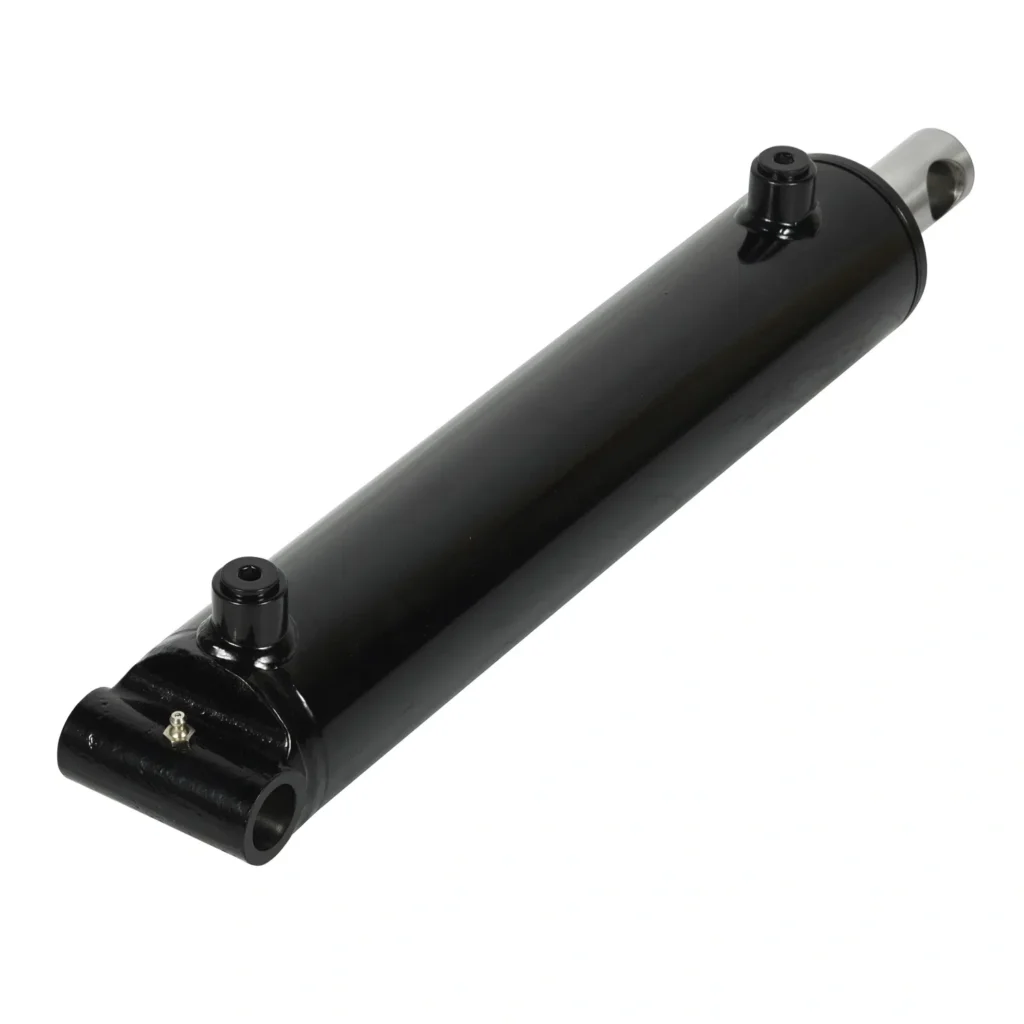
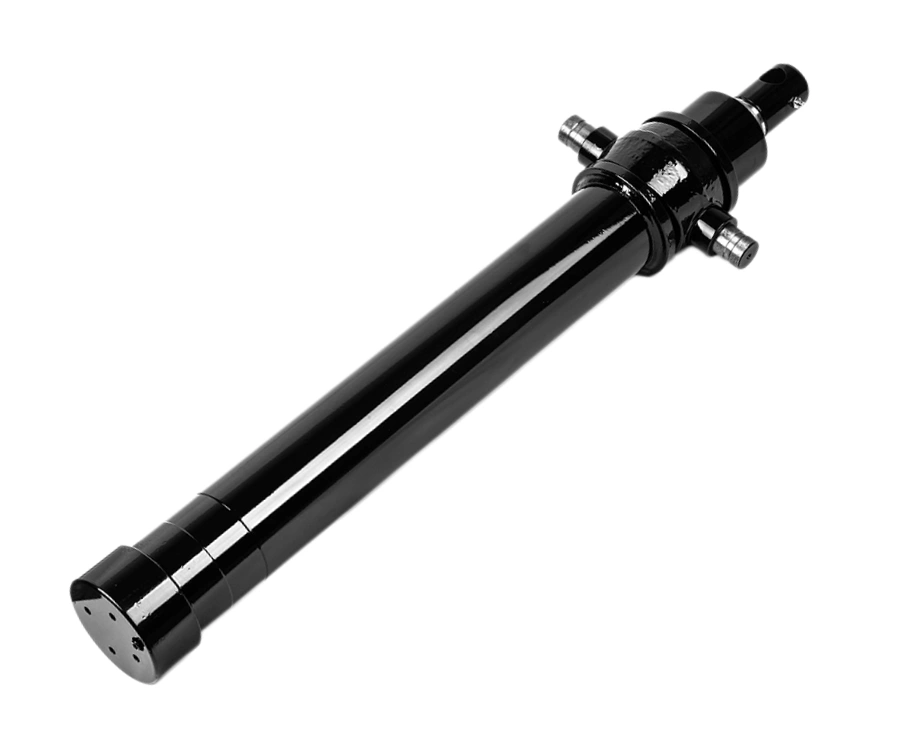
In modern heavy machinery, manufacturing automation, and industrial systems, hydraulic cylinders play a critical role. From the giant arms of excavators at construction sites to precision pressing machines in automotive manufacturing, hydraulic cylinders provide the immense force and precise linear motion required to get hard jobs done.
If you are new to fluid power systems or looking for a clear explanation of hydraulic mechanical advantage, one central question arises: How does a hydraulic cylinder work?
In this guide, we will break down the fundamental physics, internal components, step-by-step operating mechanisms, and common types of hydraulic cylinders—structured for both clarity and industrial insight.
What is a Hydraulic Cylinder?
A hydraulic cylinder is a mechanical actuator used in hydraulic systems to convert fluid energy (hydraulic pressure) into mechanical energy (linear motion or force).
If you view a hydraulic system like a human body:
The hydraulic pump acts as the heart.
The hydraulic fluid acts as the blood.
The hydraulic cylinder acts as the muscle that performs physical work.
The Core Physics: Pascal’s Law
The operation of every hydraulic cylinder relies on Pascal’s Law, a fundamental principle in fluid mechanics formulated by Blaise Pascal.
Pascal’s Law: Pressure applied to a confined fluid is transmitted undiminished in all directions throughout the fluid.
When force is applied at one point in a closed system, that force travels through the fluid equally to all other points.
This relationship is defined by the core formula:
F = P ✖️ A
Where:
F= Force (lbs or N)
P = Hydraulic System Pressure (PSI or Bar)
A = Effective Surface Area of the Piston (in^2 or m^2)
By controlling fluid pressure and adjusting piston size, hydraulic cylinders can generate tens of tons of pushing or pulling force using relatively small pumps.
Key Components of a Hydraulic Cylinder
To understand how movement occurs, it helps to examine the internal construction of a standard double-acting hydraulic cylinder:
Cylinder Barrel (Tube): The seamless, precision-honed steel body that houses the pressurized fluid.
Piston: A metal disc located inside the barrel that divides the internal space into two chambers: the cap end (blind end) and the rod end.
Piston Rod: A hard chrome-plated steel rod connected to the piston that extends outside the cylinder to move the external load.
Cylinder Cap & Gland (Head): Enclosures at both ends of the barrel. The gland includes rod seals and wiper seals to prevent fluid leaks and contaminant ingress.
Seals and Bearings: O-rings, piston seals, and wear rings that maintain internal pressure differentials and support linear guidance.
Step-by-Step: How a Hydraulic Cylinder Works
Hydraulic cylinders operate through controlled fluid displacement. Let’s look at a standard double-acting hydraulic cylinder, which provides power in both directions.
       Cap End (Blind End)                 Rod End
    +-----------------------+-------+-------------------+
    |                       |       |=========|         |
===>| [Pressurized Fluid]   |Piston |  Rod    |=======> | (Extending)
    |                       |       |=========|         |
    +-----------------------+-------+-------------------+
1. Extension Stroke (Pushing Force)
Fluid Entry: High-pressure hydraulic fluid is directed into the cap end (rear port) of the cylinder barrel.
Pressure Build-Up: The pressurized fluid pushes against the full surface area of the piston.
Motion & Discharge: As pressure increases, the piston moves forward, extending the piston rod out of the cylinder. Fluid on the rod side is pushed out through the front port back to the reservoir.
Force Output: Because the fluid acts on the entire piston area (A_piston), the cylinder generates its maximum pushing force.
2. Retraction Stroke (Pulling Force)
Fluid Reversal: A directional control valve redirects high-pressure fluid into the rod end (front port).
Return Motion: The pressurized fluid fills the rod chamber and pushes the piston backward.
Fluid Return: Fluid on the cap end is forced out and returns to the hydraulic tank.
Reduced Force / Higher Speed: The effective surface area on the rod side is smaller (A-effective}} = A_piston- A_rod). Consequently, for the same pressure, retraction force is lower than extension force, but motion is typically faster.
Main Types of Hydraulic Cylinders
Depending on the operational demands, hydraulic cylinders are engineered in several configurations:
1. Single-Acting Cylinders
Hydraulic fluid operates in one direction only. Pressure extends (or retracts) the piston, while an external force—such as gravity or an internal spring—returns the piston to its starting position.
2. Double-Acting Cylinders
Fluid pressure is applied to both sides of the piston sequentially, producing active power in both extension and retraction directions. This is the most common design in modern machinery.
3. Telescopic Cylinders
Composed of nested tubular segments (stages) that extend sequentially. They provide a long working stroke while maintaining a compact retracted length—ideal for dump trucks and crane booms.
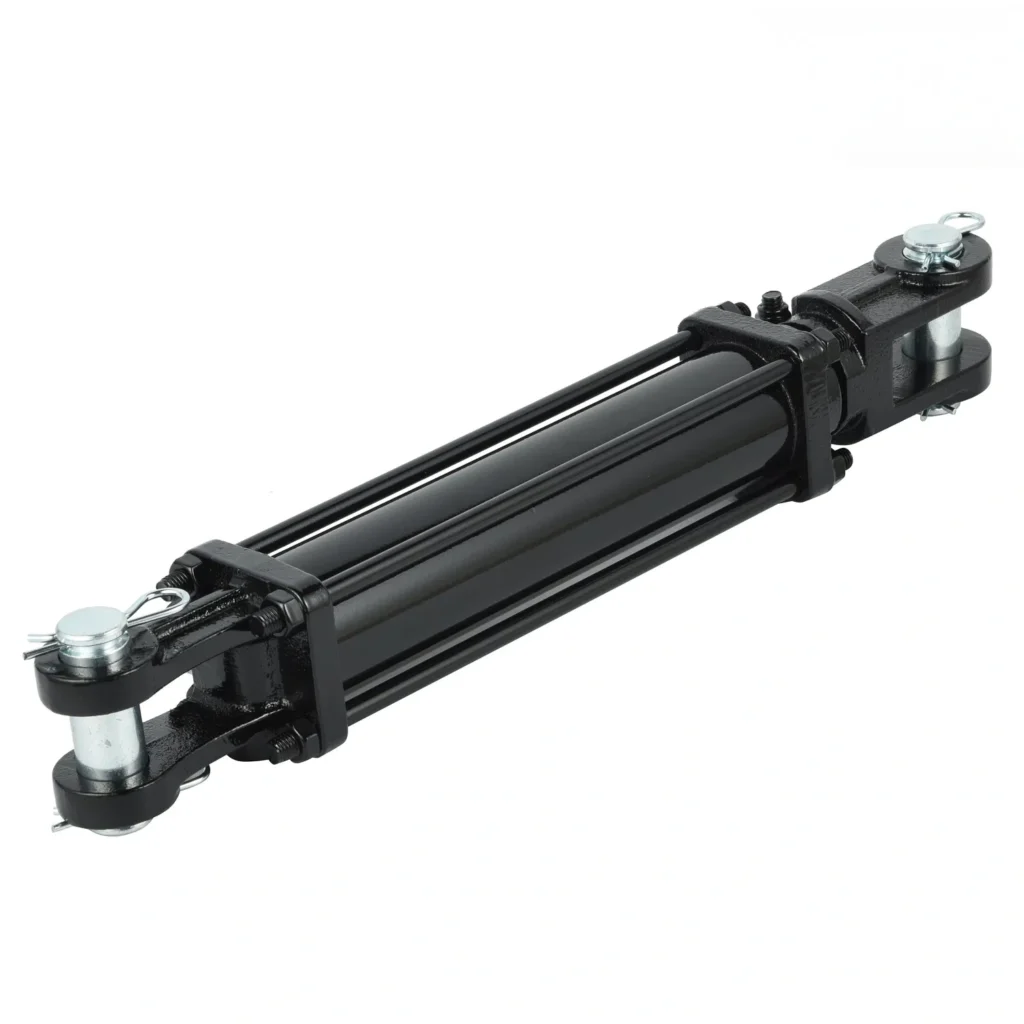
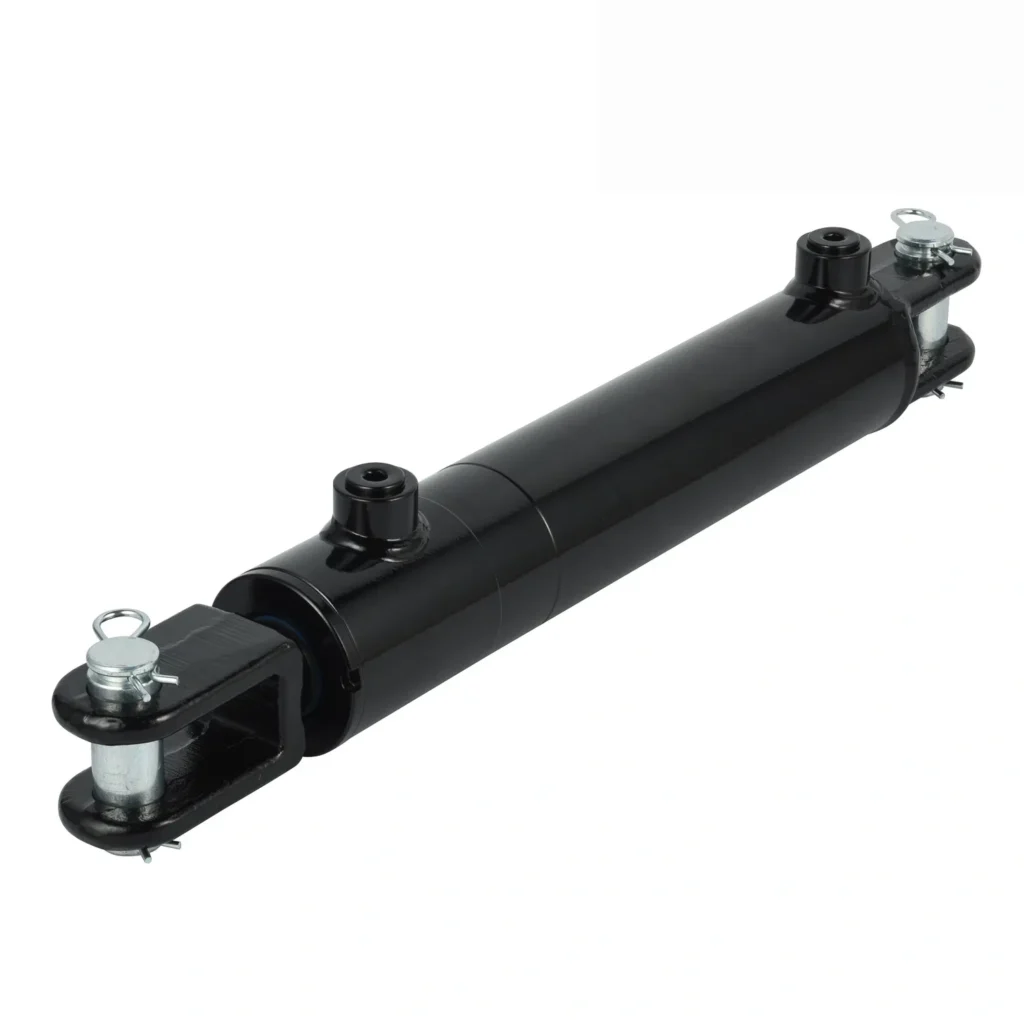
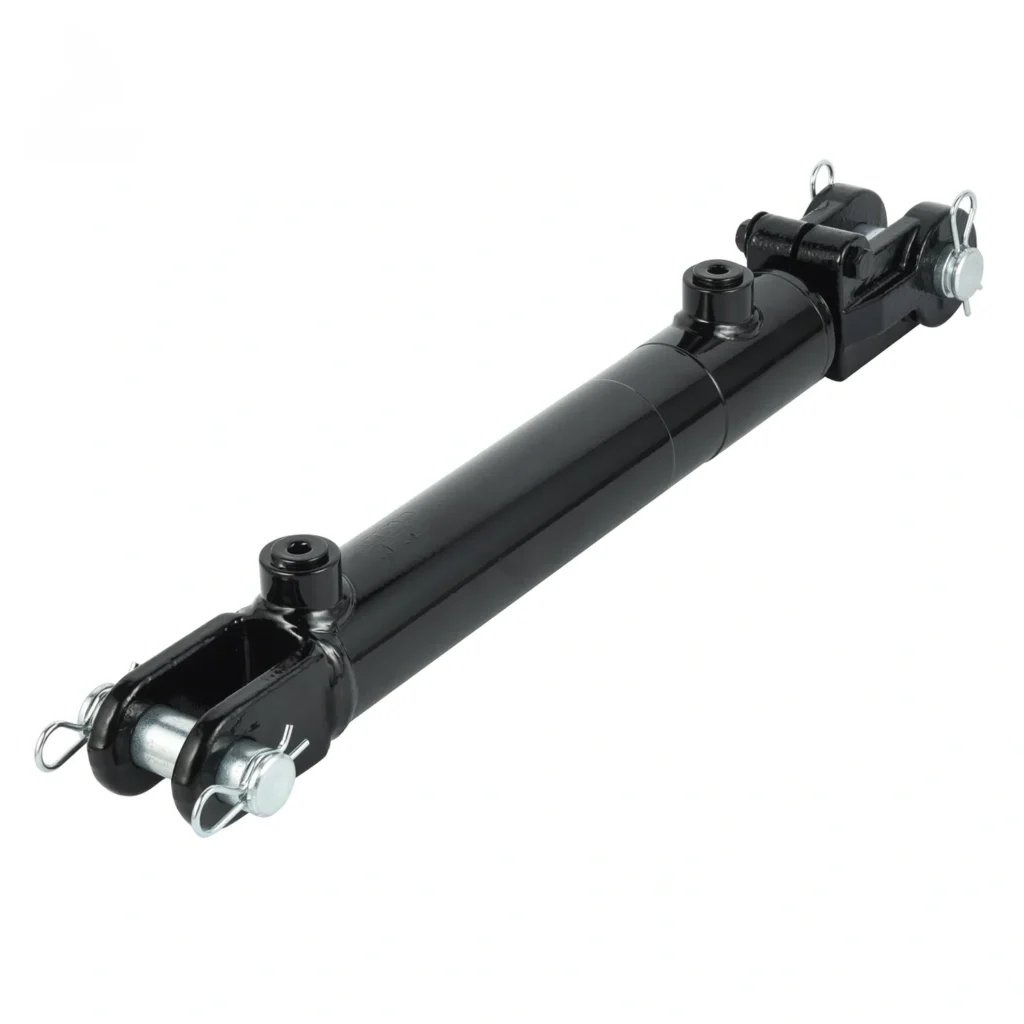
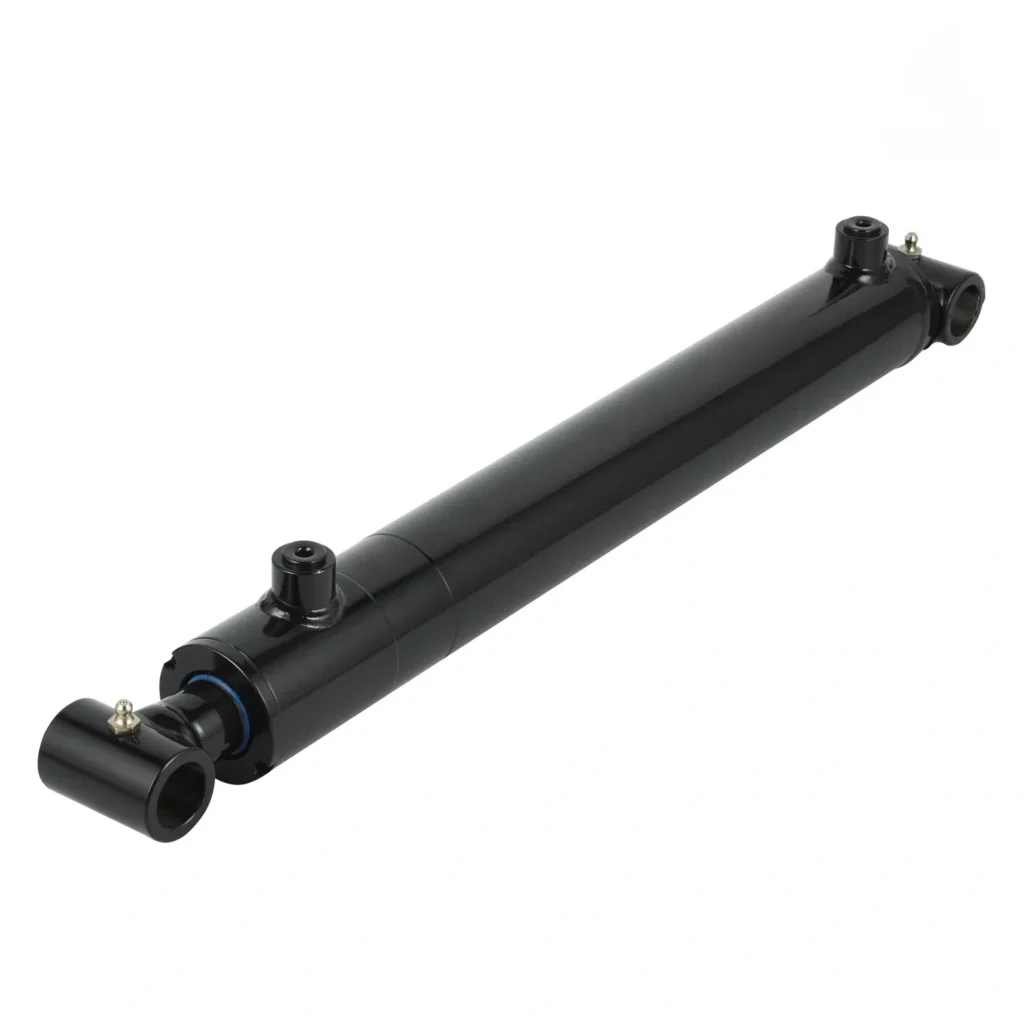
4. Tie-Rod vs. Welded Cylinders
Tie-Rod Cylinders: Use high-strength threaded steel rods to hold the end caps to the barrel. Common in industrial plant machinery due to ease of disassembly and repair.
Welded Body Cylinders: Feature caps welded directly to the barrel. They offer a compact profile and higher durability under heavy-duty mobile applications (e.g., excavators and agricultural equipment).
Advantages of Hydraulic Cylinders
High Power Density: Delivers extreme mechanical force from a compact footprint.
Smooth & Precise Control: Allows fine adjustment of speed, force, and position.
Overload Protection: Hydraulic relief valves protect the system and mechanical structures from structural damage during jam events.
Environmental Resilience: Capable of operating under high temperatures, underwater, and in heavy dust or mud environments.
Summary
At its core, a hydraulic cylinder transforms fluid pressure into brute mechanical force using basic physical principles. By routing pressurized oil to alternating sides of a sealed piston inside a honed barrel, these components power the essential infrastructure and manufacturing systems around the globe.
Understanding how hydraulic cylinders operate helps in choosing the right component specifications, performing preventative maintenance (such as monitoring seal wear or fluid contamination), and troubleshooting fluid power systems efficiently.